
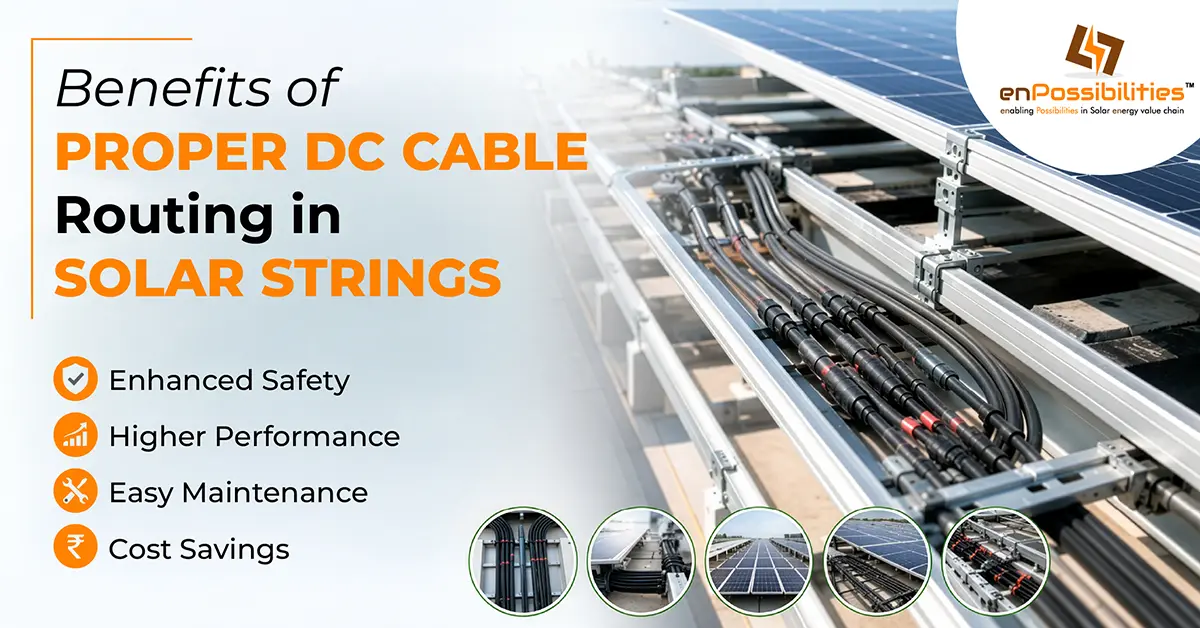
Hey there, solar enthusiasts! Imagine walking through a massive solar farm on a bright sunny day. The panels are gleaming, quietly turning sunlight into power. But beneath all that beauty lies a network of cables — the DC strings that carry electricity from panels to inverters.
Get the routing wrong, and you could face headaches like energy losses, frequent breakdowns, and higher costs. Get it right? You unlock smoother performance, longer system life, and better returns. Today, we’re diving into the real-world benefits of proper DC cable routing in solar strings — explained in simple, friendly language. Whether you’re a developer, installer, or just curious about big solar projects, this guide will help you see why small details make a huge difference.
What is DC Cable Routing in Solar Strings?
In simple terms, DC cable routing is how you lay out and connect the cables that run from groups of solar panels (called “strings”) to combiners or inverters. In utility-scale farms, these cables can stretch for kilometres. Proper routing means careful planning — avoiding sharp bends, protecting from weather, securing everything neatly, and minimizing length where possible.
It’s not glamorous work, but it’s one of those behind-the-scenes things that separates good solar projects from great ones.
Top Benefits of Doing It the Right Way
Reduced Energy Losses (More Power, More Money)- Poor routing leads to longer cable runs and voltage drops. Electricity literally gets “lost” as heat along the way. Proper routing keeps cables as short and straight as possible, so more of the power you generate actually reaches the inverter.
In big utility projects, even a small percentage improvement in efficiency can mean thousands of extra dollars in revenue every year. That’s real impact!
Longer System Life & Fewer Breakdowns– Cables exposed to harsh sun, wind, rain, or animals can crack, fray, or get damaged. Good routing uses proper supports, UV-resistant ties, and protective conduits. This prevents wear and tear, reduces fault risks, and keeps your farm running smoothly for decades.
Think of it like organizing your home wires — neat and protected means fewer surprises down the road.
Easier Maintenance and Lower Costs- When cables are neatly routed and labelled, technicians can quickly spot and fix issues. No more tangled messes or digging through chaos during repairs. This saves time, labour and money — especially important in large utility-scale solar farms where downtime costs a lot.
Better Safety and Compliance Proper routing minimizes risks of short circuits, ground faults, or fire hazards. It also helps meet strict safety standards and grid codes. Peace of mind for everyone involved — from owners to insurance companies.
Improved Performance in Tough Conditions Shading, temperature changes, and terrain variations affect solar strings. Smart routing (combined with good string design) helps each string perform at its best. In string inverter setups, this becomes even more valuable because every string counts.
Cost Savings on Materials and Installation Though it takes planning upfront, proper routing often uses less cable overall and avoids expensive fixes later. Strategic placement of combiner boxes and inverters reduces total cable length dramatically.
Future-Proofing Your Solar Farm Well-routed systems are easier to expand or upgrade. Adding more panels or batteries? No major rewiring nightmares. This flexibility is gold for growing renewable energy projects.
Real-World Tips for Proper DC Cable Routing
- Keep runs short and direct whenever possible.
- Respect minimum bend radii to avoid damaging cables.
- Use high-quality, UV-resistant cables and fixings.
- Bundle neatly but not too tightly — allow for heat expansion.
- Elevate cables off the ground or use proper trays/conduits.
- Label everything clearly for easy troubleshooting.
- Simulate layouts with software before installation.
These small habits pay off hugely over the 25+ year life of a solar plant.
Challenges When Routing Goes Wrong
- Higher voltage drops and lower energy yield
- Premature cable failures and expensive replacements
- Safety risks and potential insurance issues
- Difficult, time-consuming maintenance
- Overall lower return on investment
The good news? These problems are completely avoidable with thoughtful planning and experienced teams.
Why It Feels Good to Get It Right
There’s something satisfying about a well-built solar farm — not just powerful, but tidy and professional. Proper DC cable routing shows care and expertise. It reflects pride in creating clean energy infrastructure that will serve communities for generations.
Investors and developers who focus on these details often see better performance, smoother operations, and stronger long-term profits. Plus, it just feels right — building something sustainable the right way.
Final Thoughts: Don’t Overlook the Cables!
In the exciting world of utility-scale solar, it’s easy to focus on shiny panels and powerful inverters. But remember: the humble DC cables and how you route them can make or break your project’s success.
Proper DC cable routing in solar strings delivers better efficiency, reliability, safety, and savings. It’s one of those smart investments that keeps giving year after year.
If you’re planning or managing a solar farm, partner with experienced teams who understand these details.
The sun is free — let’s make sure we capture and deliver every possible ray effectively!
Frequently Asked Questions (FAQs)
Q1: What is DC cable routing in solar projects?
It’s the careful planning and installation of cables that carry DC power from solar panel strings to inverters or combiners.
Q2: Does proper routing really save money?
Yes! It reduces energy losses, prevents early failures, and lowers maintenance costs over the project’s lifetime.
Q3: How important is it for utility-scale solar farms?
Extremely important. With kilometres of cables, even small improvements add up to big performance and financial gains.
Q4: What are common mistakes in DC routing?
Too-long runs, sharp bends, poor protection from weather/animals, and messy bundling.
Q5: Can bad routing affect string inverters?
Absolutely. Poor input from strings reduces overall efficiency and can stress the inverters.
Q6: What tools or practices help with good routing?
Design software, quality UV-resistant materials, proper supports, and experienced installers.
Q7: Should I worry about this in smaller projects too?
Yes — the principles apply everywhere, though the scale differs.