
Power demand is increasing every day.
Homes use more appliances. Businesses run more machines. EV charging is growing. Air conditioners, data centers, and digital systems are increasing electricity consumption worldwide.
At the same time:
- Electricity prices are rising
- Power grids are under pressure
- Power cuts and voltage issues still happen
- Fossil fuels are becoming expensive
This is why the world is now moving toward solar + storage systems.
Globally, countries are investing heavily in solar energy with battery storage. Because solar alone is not enough — energy must also be stored for use at night and during outages. That is where solar hybrid systems become the future.
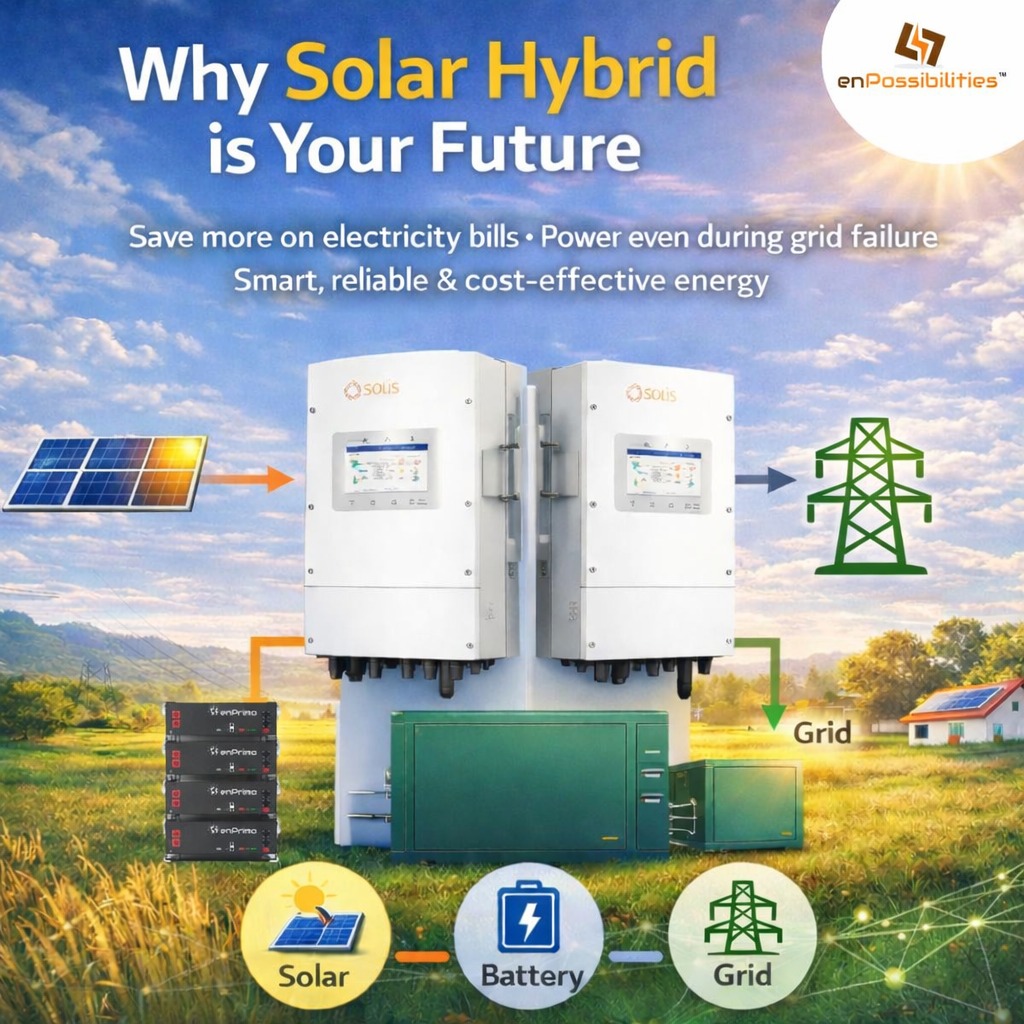
A solar hybrid system gives you:
- Solar generation
- Battery storage
- Grid support
All working together intelligently.
Why the World Is Moving Toward Solar + Storage
- Rising Power Demand: Energy consumption is increasing every year. Solar storage helps meet demand without overloading the grid.
- Grid Instability: In many regions, grids face overload and shutdowns. Solar storage reduces dependence on the grid.
- Energy Independence: Countries and homeowners want control over their own power.
- Cleaner Energy Goals: Governments are pushing renewable energy targets. Solar with storage supports these goals.
- Electric Vehicle Growth: EV charging increases electricity demand. Hybrid systems help manage that load efficiently.
The future of energy is not just solar. The future is solar with storage.
1. Thermal Power (Coal & Gas)
Thermal power plants generate a large portion of global electricity.
But they:
- Produce high carbon emissions
- Depend on fossil fuels
- Face fuel price fluctuations
They are reliable, but not sustainable long term.
2. Nuclear Energy
Nuclear power produces large amounts of electricity with low carbon emissions.
However:
- It requires high investment
- Safety concerns exist
- Plant setup takes many years
It is stable, but expansion is slow.
3. Hydro Power
Hydropower has been successful and provides clean energy.
But:
- It depends on rainfall and water levels
- Drought reduces output
- Not every country has suitable rivers
Hydro works well — but only where natural conditions allow it.
4. Biomass Energy
Biomass generates electricity from organic materials.
It is renewable but:
- Limited in scale
- Depends on continuous raw material supply
- Not suitable for large urban demand alone
Compared to these conventional sources, modern solar energy panel combined with hybrid inverters offers a more flexible and future-ready solution. Large-scale deployment is also supported through professional solar project development and EPC services.
Why Solar + Storage Is Different
Solar energy has grown faster than most other sources.
It:
- Produces clean energy
- Is easy to install
- Works almost everywhere
But solar alone works only during the day.
That is why the future is not just solar.
The future is solar with storage (hybrid systems).
Hybrid systems:
- Generate power during the day
- Store extra power in batteries
- Supply electricity at night
- Provide backup during outages
As global power demand increases year by year, countries are shifting toward solar + battery storage systems because they provide:
- Clean energy
- Energy security
- Lower grid pressure
- Long-term sustainability
Global electricity demand has increased by about 90% since 2000. In 2000, total electricity use was around 15,108 TWh, and by 2022 it rose to 28,661 TWh — nearly almost double in 22 years. Global electricity demand is expected to keep growing strongly — with demand increasing around 3.3% in 2025 and 3.7% in 2026 due to rising use of appliances, cooling, EVs, industries, and data centres.
The Rising Demand for Electricity (2000–2026)
Global electricity demand has grown rapidly over the past two decades.
- In 2000, the world used about 15,108 TWh of electricity.
- By 2022, this had almost doubled to around 28,661 TWh — an increase of roughly 90%.
Electricity demand keeps rising. Experts expect demand to grow by about 3.3% in 2025 and 3.7% in 2026, driven by more appliances, data centres, industry, and electric vehicles.
What Is an On-Grid Solar System?
An on-grid system:
- Works with the electricity grid
- Uses solar during the day
- Sends extra power to the grid
But:
If the grid goes off, the system shuts down.
No grid = No power.
It has no battery backup.
What Is a Solar Hybrid System?
A solar hybrid system connects:
- Solar panels
- Battery storage
- Electricity grid
It stores extra solar energy in batteries and uses it when needed. Even if the grid fails, you still have power.
On-Grid vs Hybrid: Simple Comparison
| Feature | On-Grid | Hybrid |
|---|---|---|
| Battery backup | No | Yes |
| Works during power cut | No | Yes |
| Energy storage | No | Yes |
| Grid dependency | High | Low |
| Energy control | Basic | Smart & flexible |
| Long-term savings | Moderate | Higher |
More Advantages of Solar Hybrid Systems
1. Power Security : You are protected from power cuts and grid failures.
2. Better Use of Solar Energy: Instead of sending extra power to the grid, you store it and use it later using high-efficiency panels from
SWELECT ENERGY SYSTEMS, SAATVIK GREEN ENERGY, Vikram SOLAR, JINKO SOLAR, andJA Solar.
3. Lower Electricity Bills : Using stored energy at night reduces grid consumption.
4. Smart Energy Management: Hybrid inverters like SOLIS and SUNGROW automatically decide how and when to use solar, battery, or grid power.
5. Reduced Generator Usage : Less need for diesel generators. This reduces fuel cost and pollution.
6. Scalable for Future Needs: You can expand battery capacity as your power needs grow.
7. Protection from Tariff Increases: As electricity prices increase, your savings increase too.
8. Higher Energy Independence: You depend less on power companies.
9. Stable Voltage Support: Hybrid systems help manage voltage fluctuations better.
Why Solar Hybrid Is the Future
- Energy demand will not decrease. It will increase.
- Grid systems alone cannot handle future demand.
- Solar generation alone is not enough.
- Storage is the missing piece.
Solar hybrid systems combine:
- Clean energy
- Backup power
- Smart management
- Long-term savings
That is why globally, energy systems are shifting toward solar with storage.
Final Thoughts
On-grid systems are good for stable areas. But hybrid systems are smarter, safer, and future-ready.
They give:
- Backup power
- Lower bills
- Energy security
- Better control
- Long-term protection
If you are planning to invest in solar today, choosing hybrid means preparing for tomorrow’s energy needs. Solar hybrid is not just an upgrade. It is the future of power.
For premium solar modules and advanced inverter solutions, you can explore the official website EnPossibilities.