
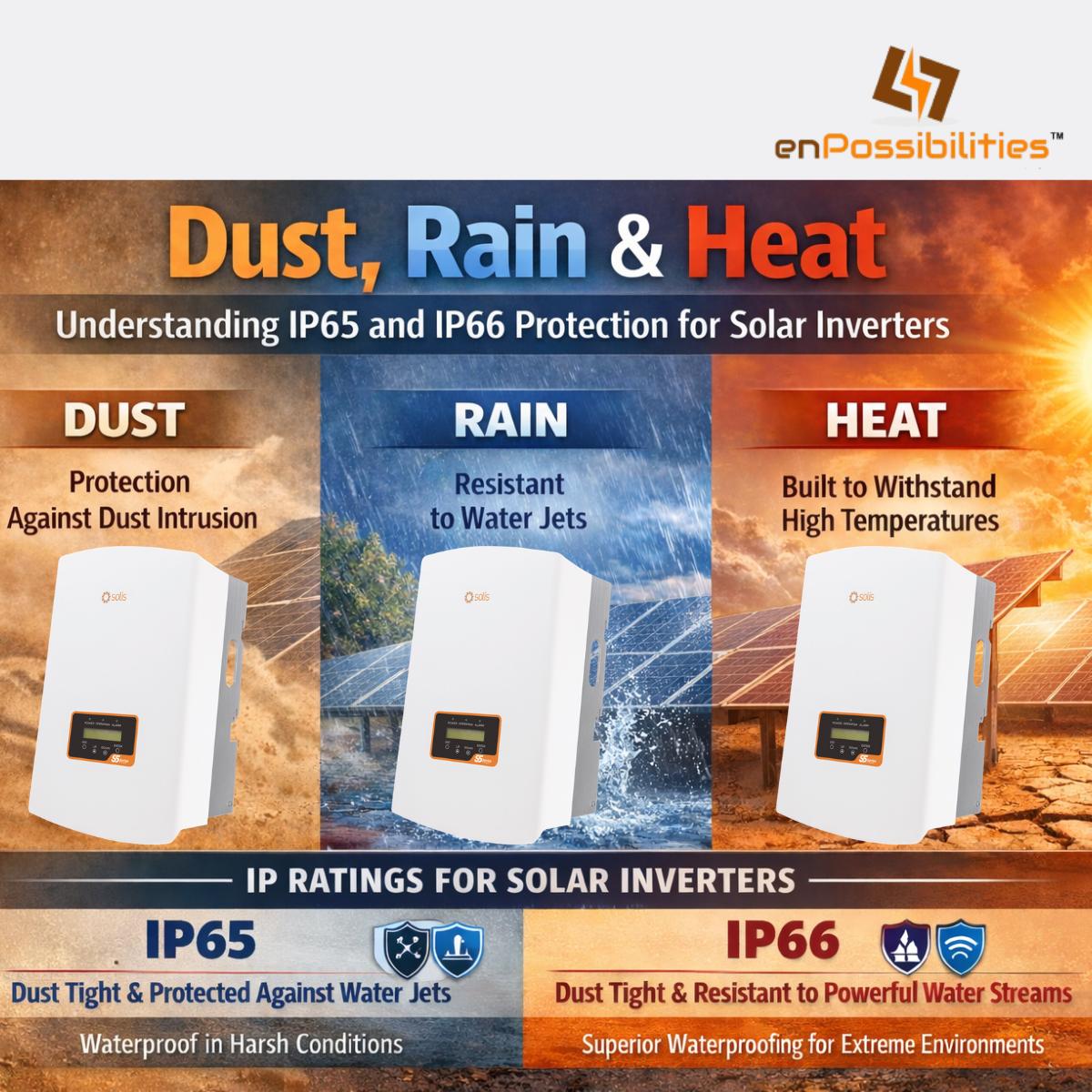
Today, many solar inverters are installed outdoors—on rooftops, terraces, factory sheds, parking areas, and outer walls. Outdoor installation is common, but it also means the inverter faces dust, rain, heat, and humidity every day.
If an inverter is not properly protected, it can fail early. That’s why IP65 and IP66 protection is important. Let’s understand this in easy words.
What Is an IP Rating?
IP means Ingress Protection.
It shows how well an inverter is protected from dust and water.
An IP rating has two numbers:
- First number → Dust protection
- Second number → Water protection
What Does IP65 Mean?
- 6 = Fully protected from dust
- 5 = Protected from rain and water splashes
In simple words:
An IP65 inverter is dustproof and rain-safe. It works well in outdoor locations like rooftops and walls.
What Does IP66 Mean?
- 6 = Fully dustproof
- 6 = Can handle heavy water pressure
In simple words:
An IP66 inverter gives extra water protection. It is suitable for places with very heavy rain or direct water spray.
IP65 vs IP66 (Simple Comparison)
| Feature | IP65 | IP66 |
|---|---|---|
| Dust protection | Full | Full |
| Rain protection | Good | Very strong |
| Outdoor use | Yes | Yes (better) |
| Best for | Rooftops, walls | Open & harsh areas |
Most outdoor installations need IP65.
IP66 is better for extreme conditions.
Why Outdoor Inverters Need Protection
Outdoor inverters face many problems at once:
- Dust and pollution
- Heavy rain and moisture
- High summer heat
- Humidity and insects
Even a little dust or water inside can cause:
- Heating issues
- Short circuits
- Lower power output
- Frequent breakdowns
Benefits of IP65 & IP66 Inverters
1. Keeps Dust Out
Dust blocks airflow and increases heat. IP-rated solar inverters stay clean inside and work smoothly.
2. Protects from Rain
Rainwater can damage electronic parts. IP65 and IP66 solar inverter systems are made to handle rain safely.
3. Safer to Use
Water and dust can cause electric shock or fire. Higher IP protection improves safety in every solar system installation.
4. Works Better in Heat
These inverters are designed to manage heat even in hot outdoor conditions and perform efficiently in modern solar energy projects.
5. Less Maintenance
No need for frequent cleaning or covers. This saves time and money.
What Happens If You Use a Low-IP Inverter Outdoors?
- Frequent inverter failure
- Rust and corrosion
- Power loss
- Warranty issues
- Higher repair cost
That’s why IP65 or higher is a must for outdoor use.
Which One Should You Choose?
Choose IP65 if your inverter is on a rooftop or wall
Choose IP66 if the inverter is fully open to rain and water
Final Words
If your solar inverter is installed outdoors, IP protection is not optional.
IP65 and IP66 inverters are built to handle dust, rain, and heat, giving you better performance, longer life, and peace of mind.
Choose the right IP-rated inverter and avoid problems later.